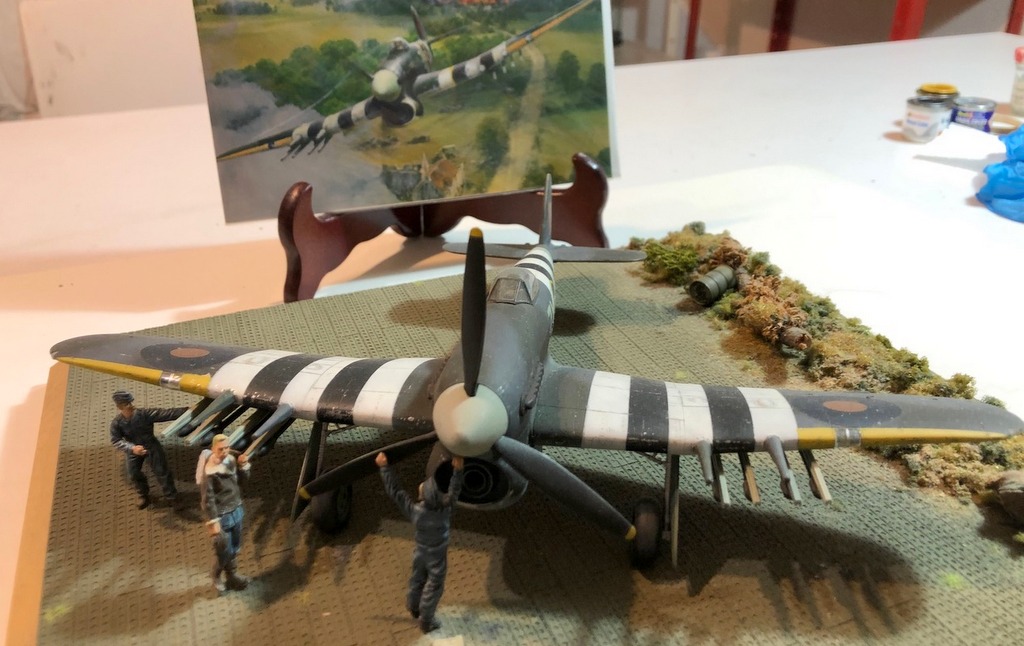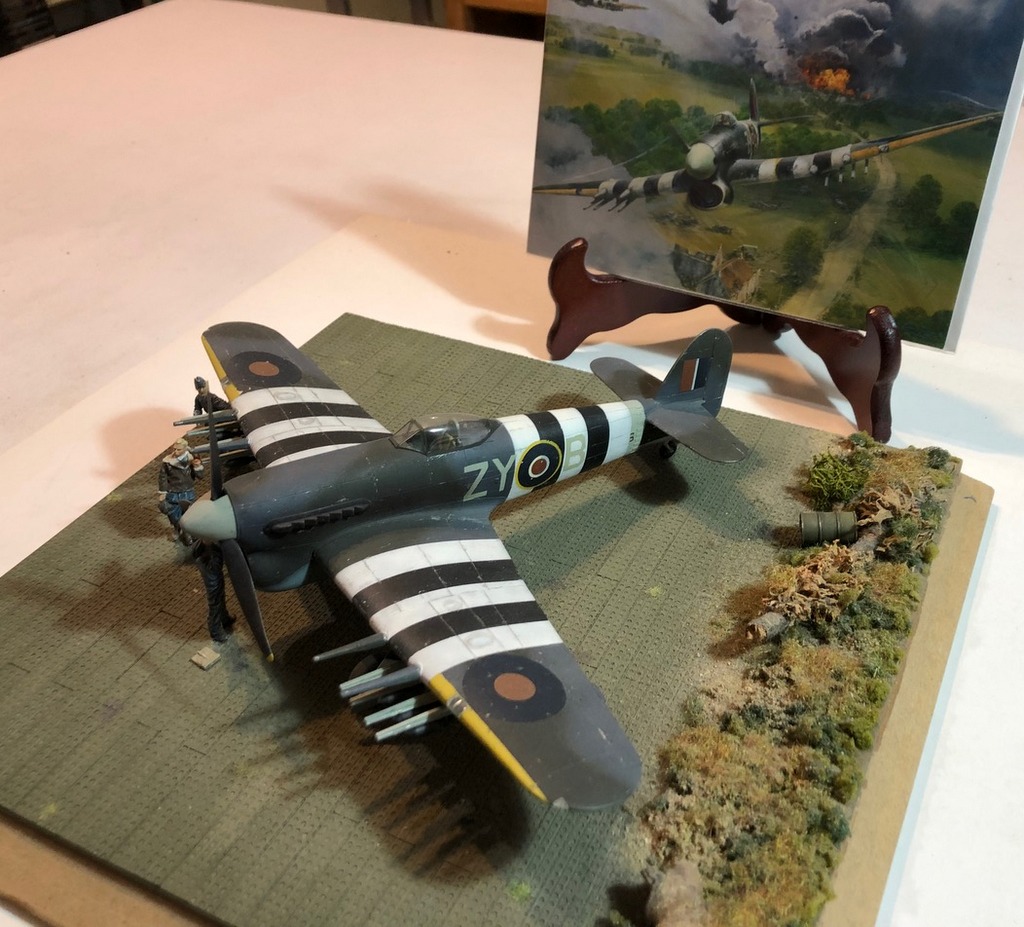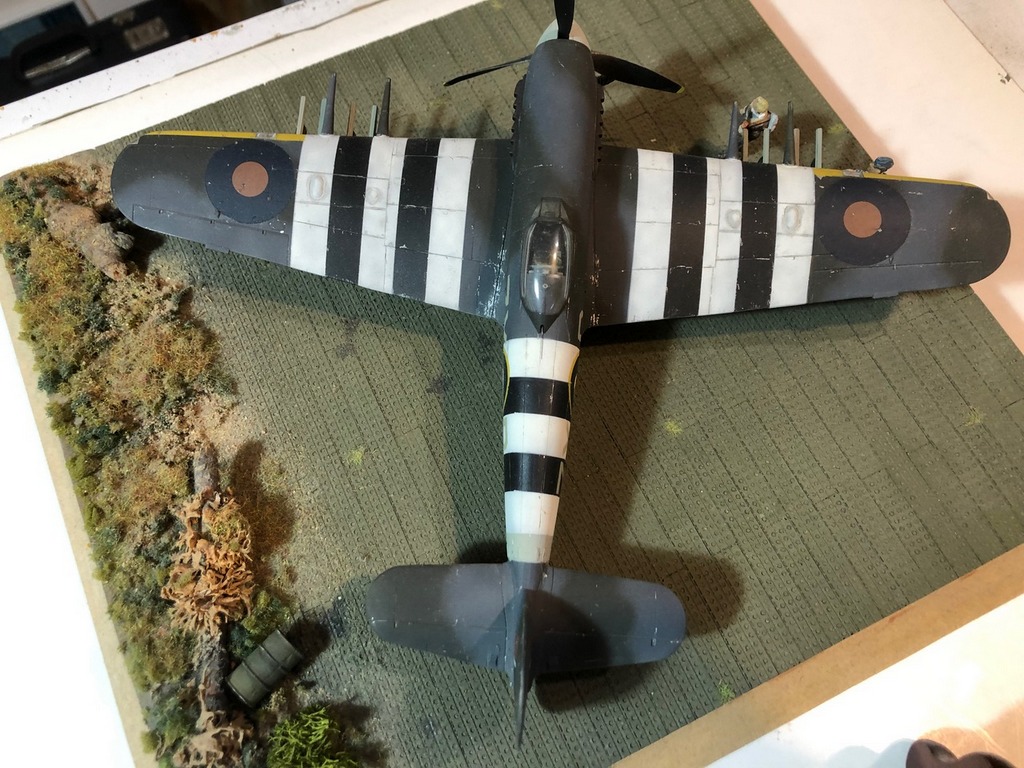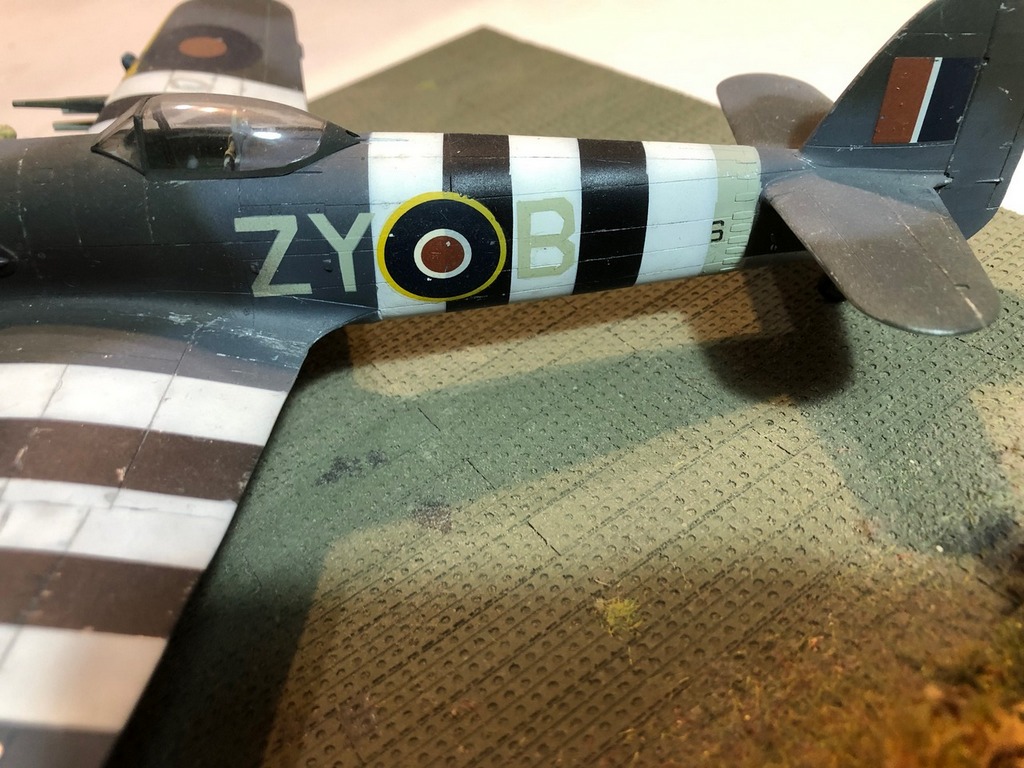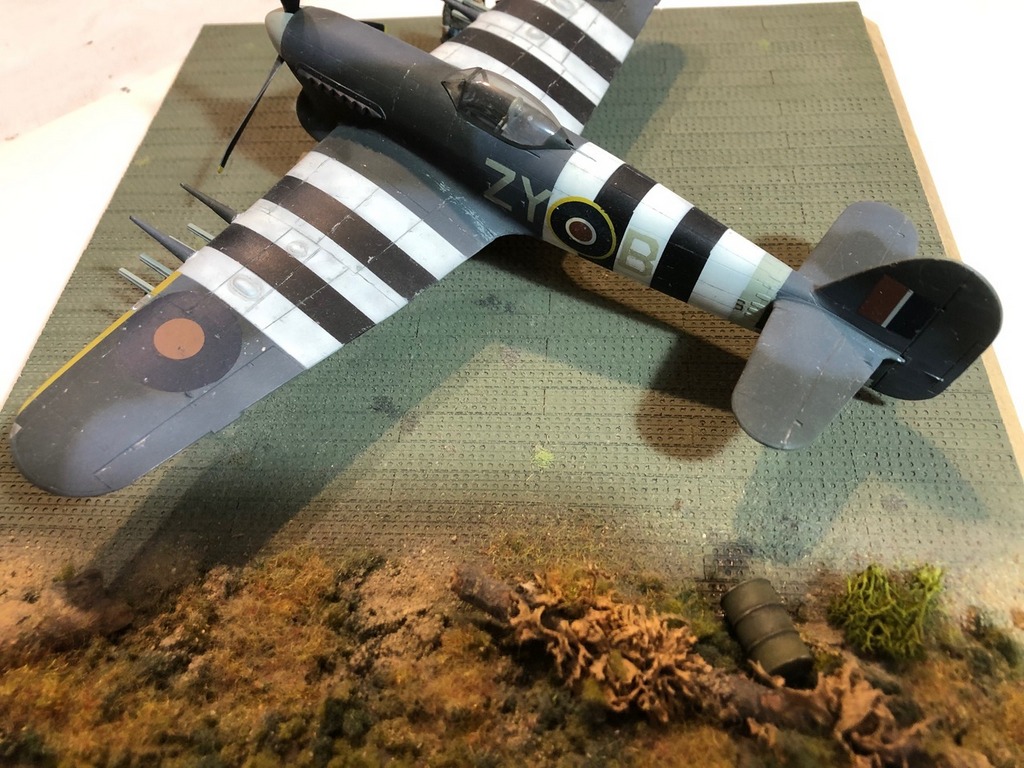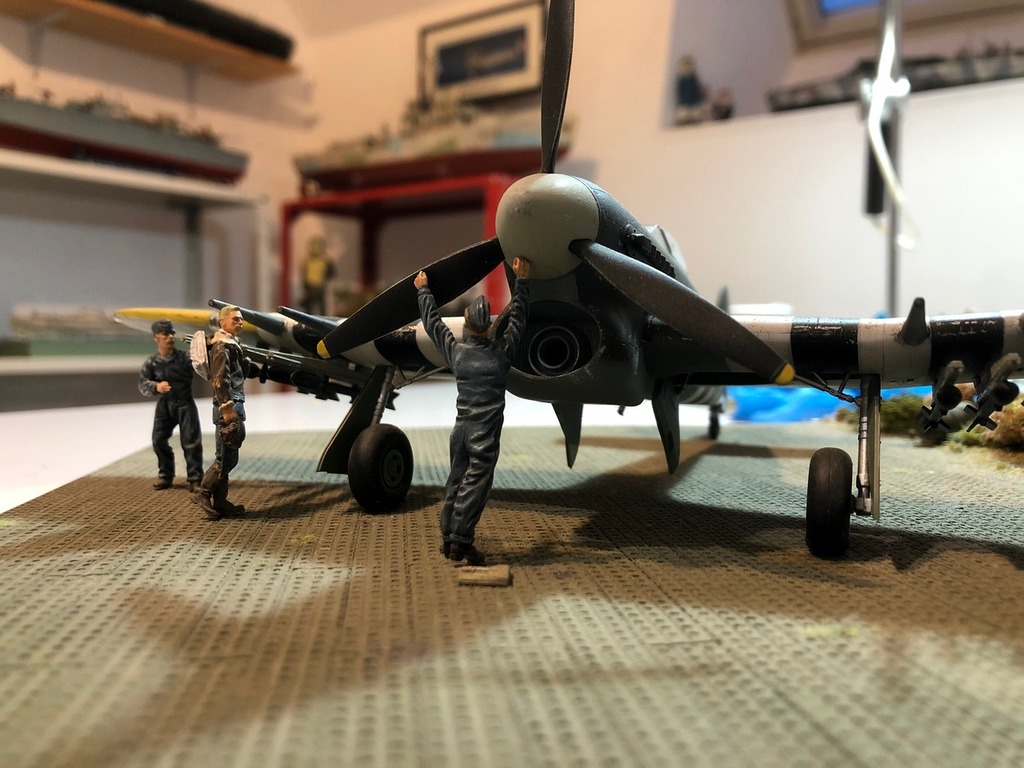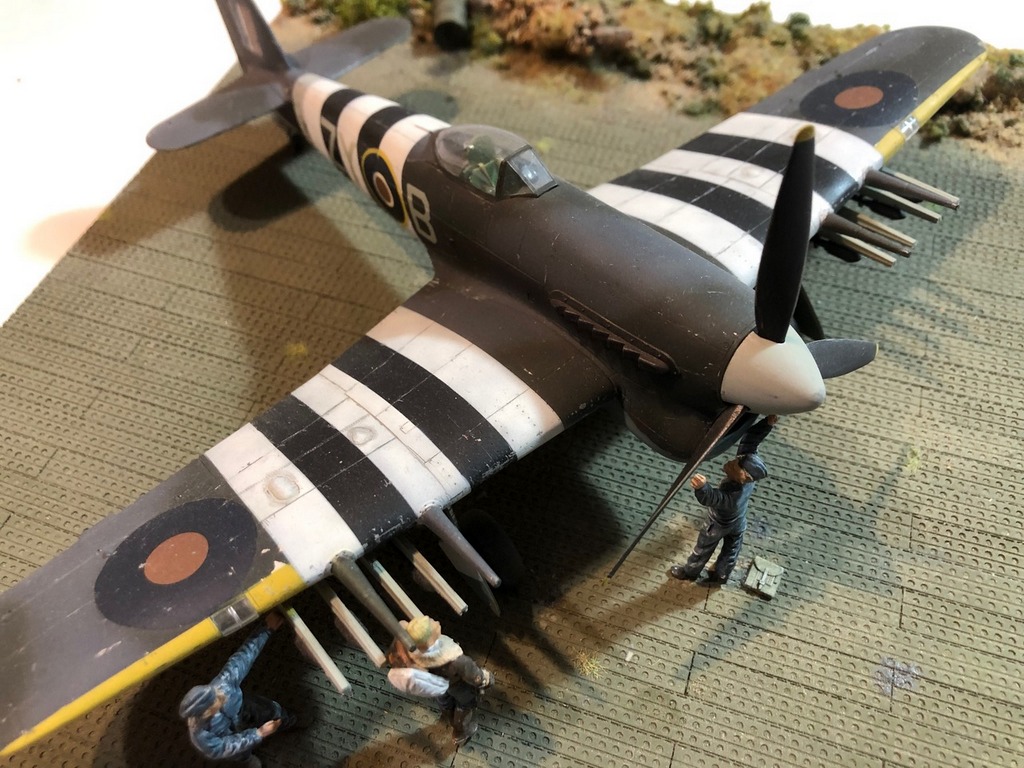
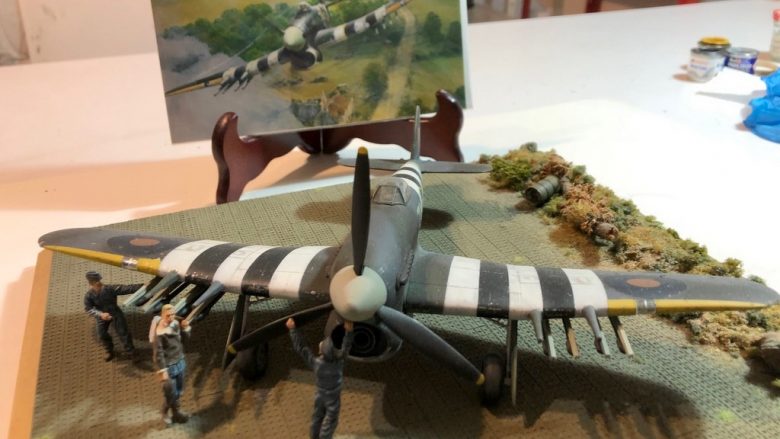
En 1938 , répondant à une demande de l’ Air Ministry en vue du remplacement du Hawker Hurricane, la Ste Hawker lance le projet du TYPHOON. Suite à une mise au point laborieuse, le premier aura lieu le 24/02/1940 . Les essais vont se poursuivrent tant bien que mal jusqu’au 09/05/1940, jour où sa structure se fissure, néanmoins ces essais vont reprendre deux mois plus tard. Mais les problèmes continuent de s’accumuler, moteur, armement et un nouveau défaut de structure va coûter la vie au pilote d’essai Keneth Seth-Smith de chez Hawker. Les Anglais sont tenaces et la mise au point de l’appareil continue, malgré une vive réticence des pilotes de » SPIT » appelés à passer sur TYPHOON. Le premier Wing de TYPHOON est formé en 1942 ( 266 , 609 , 56 , squadrons ). C’est lors des opérations du débarquement en Normandie et jusqu’à la fin du conflit en 1945 que cet avion va révéler ses qualités lors des attaques au sol contre les fantassins, chars et autres véhicules, locomotives, bateaux, au point de devenir la hantise du soldat Allemand. C’est l’ attaque d’un Typhoon qui, sur une route Normande, va détruire le véhicule du maréchal Rommel, le blessant et l’obligeant à quitter le front pour se faire soigner en Allemagne. In 1938, responding to a request from the Air Ministry for the replacement of the Hawker Hurricane, the Ste Hawker launched the TYPHOON project. Following a laborious adjustment, the first one will take place on 24/02/1940. The tests will continue as best they could until 09/05/1940, the day when its structure cracks, nevertheless these tests will resume two months later. But the problems continue to accumulate, engine, armament and a new structural defect will cost the life of test pilot Keneth Seth-Smith from Hawker. The English are tenacious and the development of the device continues, despite strong reluctance from the « SPIT » pilots called to switch to TYPHOON. The first TYPHOON Wing was formed in 1942 (266, 609, 56, squadrons). It was during the landing operations in Normandy and until the end of the conflict in 1945 that this aircraft would reveal its qualities during ground attacks against infantrymen, tanks, and other vehicles, locomotives, boats, to the point of becoming the haunting of the German soldier. It is the attack of a Typhoon which, on a Norman road, will destroy Marshal Rommel’s vehicle, wounding him and forcing him to leave the front to be treated in Germany.
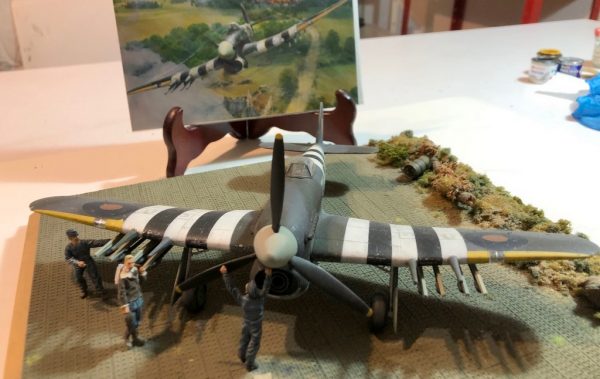
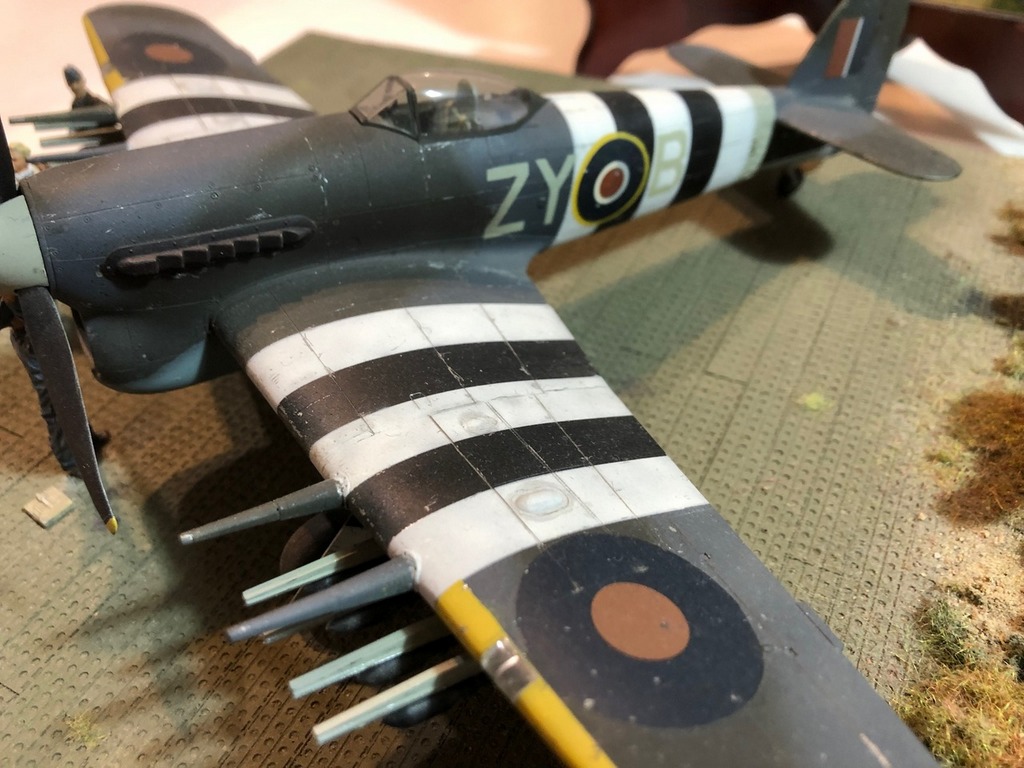
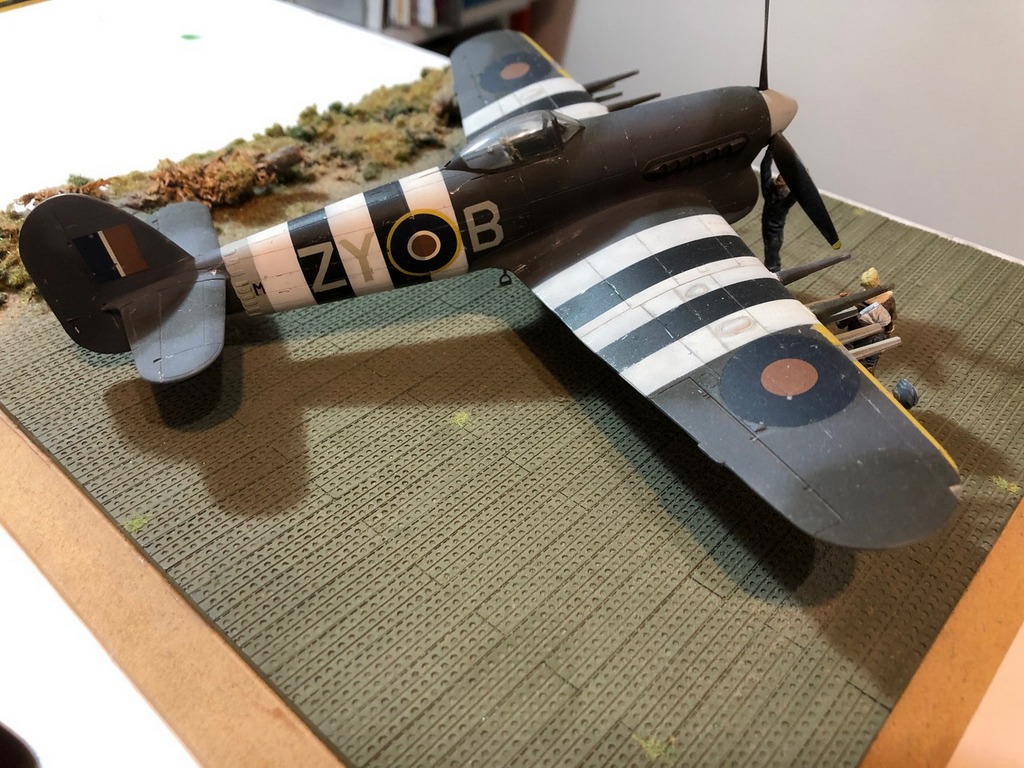
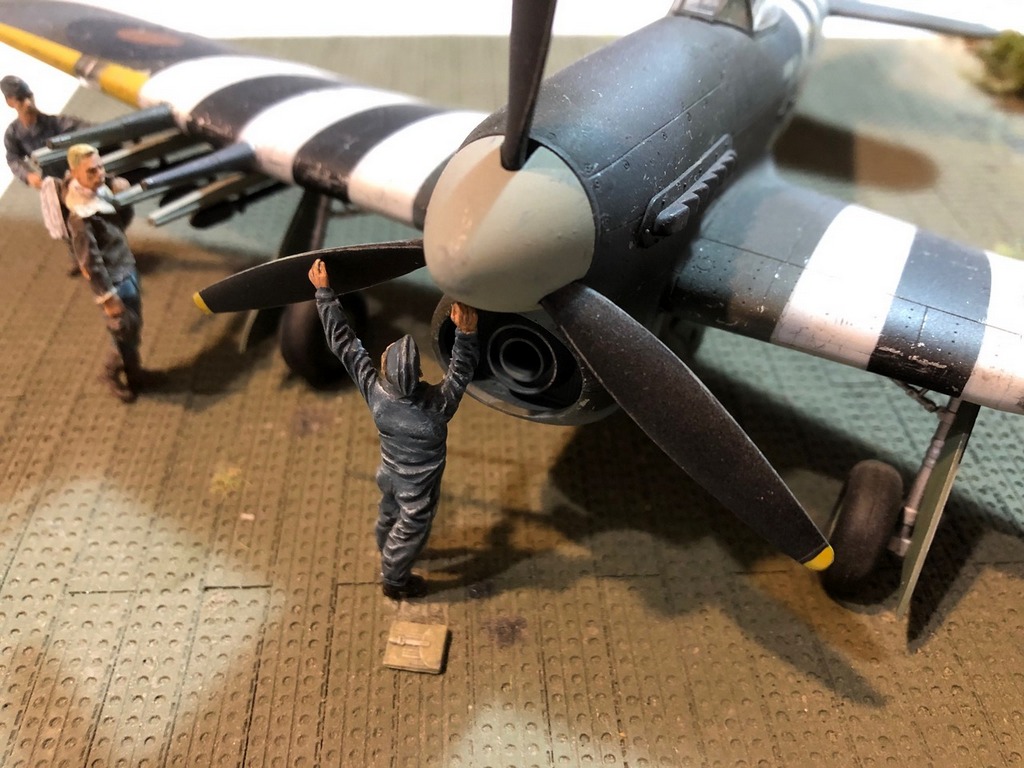
Jambes train d’atterrissage ( Humbrol argent 11 ). Sous couche totale de la maquette ( Humbrol metal cote 27002 ) Camouflage supérieur fuselage et ailes ( Tamiya XF 24 ET XF 61 ). Camouflage dessous fuselage et ailes ( Tamiya XF 54 ). Casserole hélice et bande sur fuselage ( Tamiya XF 14 )
Bandes débarquement fuselage, dessus et dessous ailes ( Humbrol satin 85 et Humbrol matt 34 ) TYPHOON posé sur piste plaques métal US marque Eduard, pas noté la peinture réalisée pour ces plaques Humbrol ? Ajout sable et végétation de jardin. Personnages de piste et pilote de marque Dartmoor military Models, peintures non notées non plus Humbrol ? HASEGAWA model at 1/48 with no mounting problem, made from the box, no added resin or photo-cut. For the decoration, during the Normandy landing, use of Humbrol and Tamiya paints. Cockpit, wheel wells, landing gear flaps (Humbrol matt 78) Landing gear legs (Humbrol silver 11). Total underlay of the model (Humbrol metal rating 27002) Upper fuselage and wings camouflage (Tamiya XF 24 AND XF 61). Underside fuselage and wings camouflage (Tamiya XF 54). Helix pan and strip on fuselage (Tamiya XF 14) Landing strips fuselage, above and below wings (Humbrol satin 85 and Humbrol matt 34 ) TYPHOON placed on metal sheet track US brand Eduard, not noted the painting done for these Humbrol plates? Add sand and garden vegetation. Runway characters and pilot of the brand Dartmoor military Models, paintings not rated either Humbrol?